California REAL ID: Do You Need One and How to Get It
REAL ID enforcement is no longer a future deadline. It started at airport checkpoints on May 7, 2025, and as of February 1, 2026 there’s a $45 fee attached to showing up without one. If you’re still carrying a card that says “Federal Limits Apply,” this guide covers what that means, whether you actually need to change it, and exactly what to bring to the DMV if you do.
Requirements below come from the DMV’s REAL ID pages and the TSA’s own announcements. Federal document rules get updated, so confirm on the official sites before your appointment.
How to tell what you already have
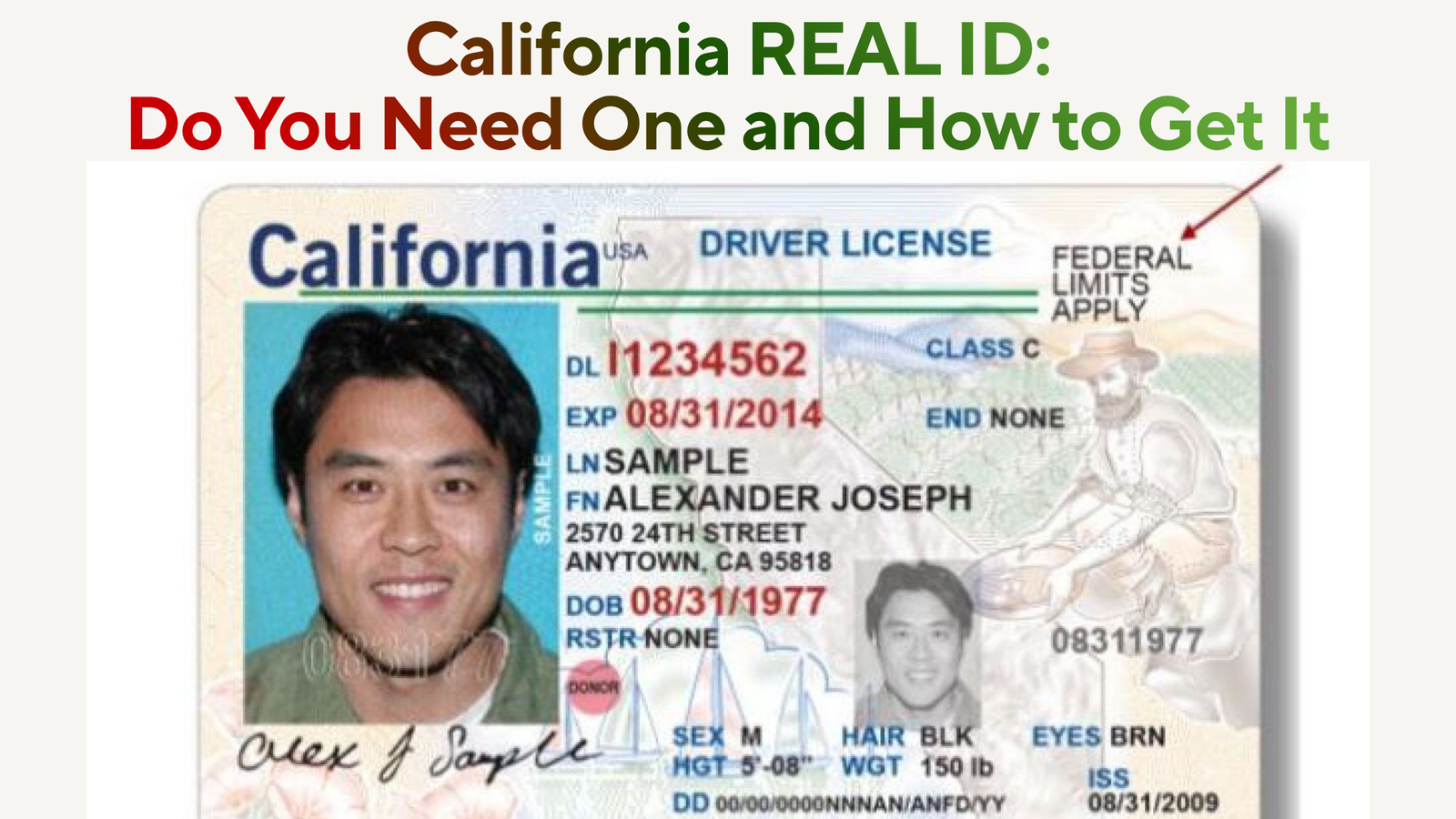
Look at the top right corner of your card.
A golden bear with a star means you have a REAL ID. You’re done, and you can stop reading.
The words “Federal Limits Apply” mean you don’t. The card still works for driving and as ordinary photo identification. It won’t get you through airport security or into a secure federal building.
Do you actually need one?
REAL ID is optional. California will happily keep issuing you a standard card for as long as you want one.
You need federally compliant identification for exactly two things: boarding a domestic flight, and entering secure federal facilities like military bases and federal courthouses. A REAL ID is one way to satisfy that. So is a U.S. passport, a passport card, a military ID, or a DHS trusted traveler card like Global Entry.
So if you already carry a passport and don’t mind bringing it to the airport, you can skip the DMV trip entirely. If you’d rather not travel with your passport, the REAL ID is the more convenient card to have in your wallet.
What you don’t need it for
There’s a lot of noise on this point, so to be specific. A REAL ID is not required to:
- Apply for or receive federal benefits from Social Security, Veterans Affairs, or similar agencies
- Enter a post office or any federal facility that doesn’t check identification
- Visit a hospital or receive medical care
- Ride Amtrak, buses, or other ground transportation
- Drive, vote, or prove your age
Children under 18 also don’t need identification to fly domestically when traveling with a companion. The adult does.
What changed, and the $45 fee
Enforcement began May 7, 2025. For a while after that, travelers without compliant identification were often waved through with extra screening, which led a lot of people to assume the rule had no teeth.
That changed on February 1, 2026, when the TSA launched TSA ConfirmID. If you arrive at a checkpoint without acceptable identification, you can now pay $45 to go through an alternative identity verification process. The details that catch people out:
- The $45 covers a 10 day travel period from the travel start date you enter. A trip longer than 10 days means paying twice.
- Payment goes through Pay.gov, and you must show the emailed receipt at the checkpoint. No receipt, and you may pay again.
- It’s voluntary, and it does not guarantee you get through. If the TSA can’t verify your identity, you don’t fly, and the fee isn’t refunded.
- Verification usually takes 10 to 15 minutes but can run 30 minutes or more, so build in extra time.
- Pre-paying at home is strongly recommended over sorting it out at the airport.
The TSA reported in February 2026 that 95 to 99 percent of travelers were arriving with acceptable identification, so this applies to a small minority. But $45 each way is a strong argument for spending one morning at the DMV instead.
What to bring
Three categories, and all of them have to be right or you’ll be sent home.
One identity document showing your date of birth and full legal name. A valid U.S. passport, a certified copy of your U.S. birth certificate, or a valid permanent resident card all work. Photocopies do not.
Two residency documents showing your first and last name and the mailing address that will appear on the card. Utility bills, cell phone bills, a mortgage statement, bank statements, and your vehicle registration card all qualify. They must be two different documents.
Your Social Security number, which goes on the application. You don’t generally need to bring the card itself, and exceptions to the requirement do exist.
If your current name doesn’t match the name on your identity document, you need name change documentation bridging the gap. A marriage certificate, divorce decree, or court order. Someone married twice needs the paperwork for both changes. This is the single most common reason people get turned away, so check it before you go.
The DMV’s interactive REAL ID checklist generates a personalized list based on which documents you actually have. Use it. It’s the closest thing to a guarantee that you’re bringing the right stack of paper.
How to apply
Your first REAL ID has to be done in person. There’s no way around it, because the DMV has to physically inspect your documents. But most of the tedious part can be handled from home first.
- Build your checklist using the DMV tool above, and gather the originals.
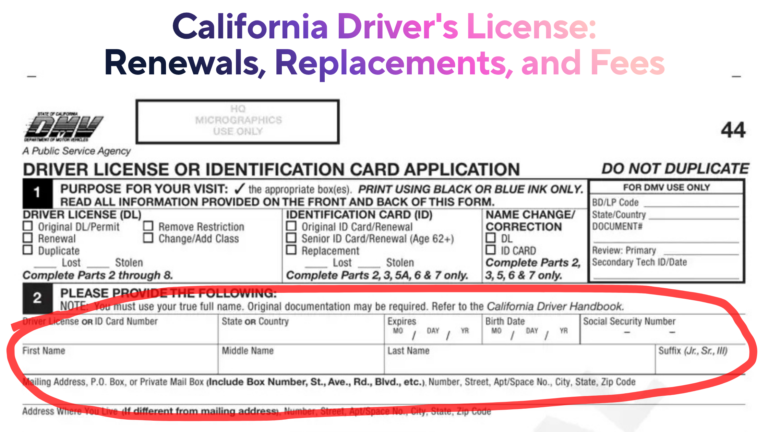
- Fill out the application online ahead of time through the DL/ID application. This saves real time at the counter.
- Book an appointment. Walk-ins mean long waits at most offices. See our appointment guide for getting a decent slot.
- Go in with your documents. You’ll give a thumbprint, pass a vision exam if you’re getting a license, have your photo taken, and pay.
- Leave with a temporary card. The real one arrives by mail in about three to four weeks.
A temporary paper license is not acceptable identification at airport security, so don’t book your REAL ID appointment for the week before a flight and assume you’re covered.
What it costs
There is no separate REAL ID fee in California. You pay the standard application fee for whichever card you’re getting, currently $46 for a Class C license and $40 for a regular ID card, per the DMV’s fee schedule. Senior citizen ID cards remain free.
You’ll see claims elsewhere about a $30 REAL ID upgrade charge. That isn’t a California fee. The cheapest approach is to apply when your card is due for renewal anyway, so the trip replaces one you’d have made regardless.
Special situations
Lawful permanent residents and many visa holders can get a REAL ID with the right immigration documents. DACA recipients have their own document rules, covered on the DMV’s non-citizen REAL ID page.
AB 60 license holders are a clear no. If you’re applying for or renewing an AB 60 license, you’re not eligible for a REAL ID, and the two are mutually exclusive.
People splitting time between two homes have specific rules about which address goes on the card, and the DMV publishes second residency FAQs covering it.
One more that annoys almost everyone: if you presented identity documents to the DMV years ago, you still have to present them again. REAL ID has its own federal documentation standard and previous submissions don’t carry over.
After you have one
The in-person requirement applies to your first REAL ID only. Once you hold one, you can usually renew online or by mail in future cycles, as long as you’re not changing your address or physical description and aren’t renewing a commercial license. Details are in our California driver’s license guide.
Frequently asked questions
Is a REAL ID mandatory?
No. It’s optional. You only need federally compliant identification to fly domestically or enter secure federal buildings, and a passport does that job too.
Can I get one online?
Not the first one. You can complete the application and build your checklist online, but the document check happens in person.
What happens if I fly without one?
You can pay $45 for TSA ConfirmID and go through additional verification, which covers a 10 day window and doesn’t guarantee you’ll clear security. Bringing a passport instead is free.
Do my kids need one?
Not for domestic flights when traveling with an adult. The TSA doesn’t require identification from anyone under 18 in that situation.
How long does the card take?
Three to four weeks by mail. You get a temporary card in the meantime, which isn’t valid at airport security.
Does it cost extra?
No. Same fee as the standard card.